
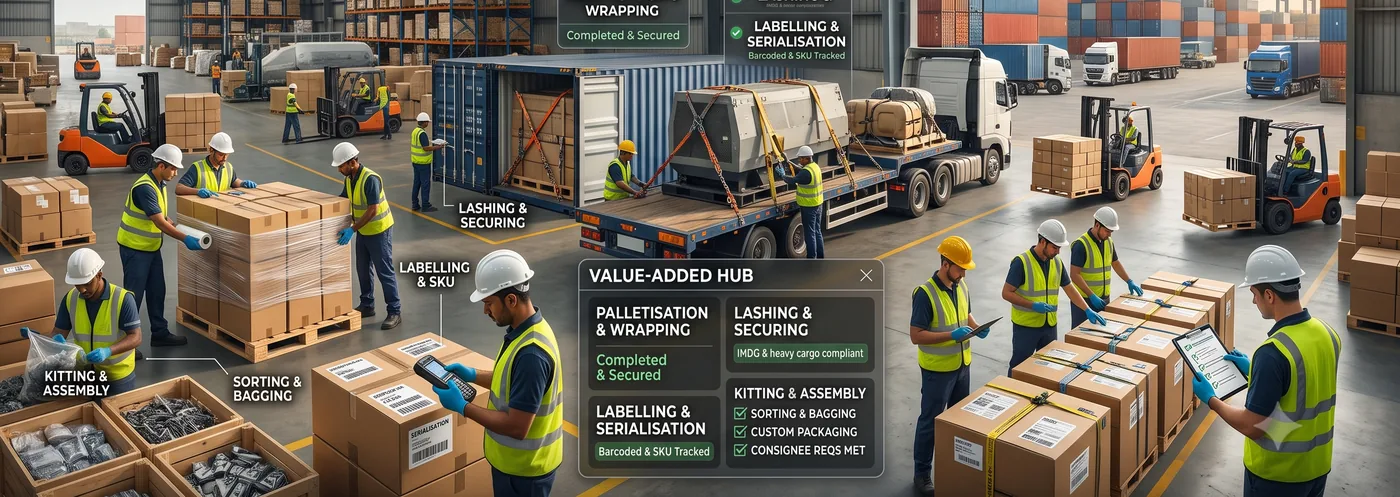
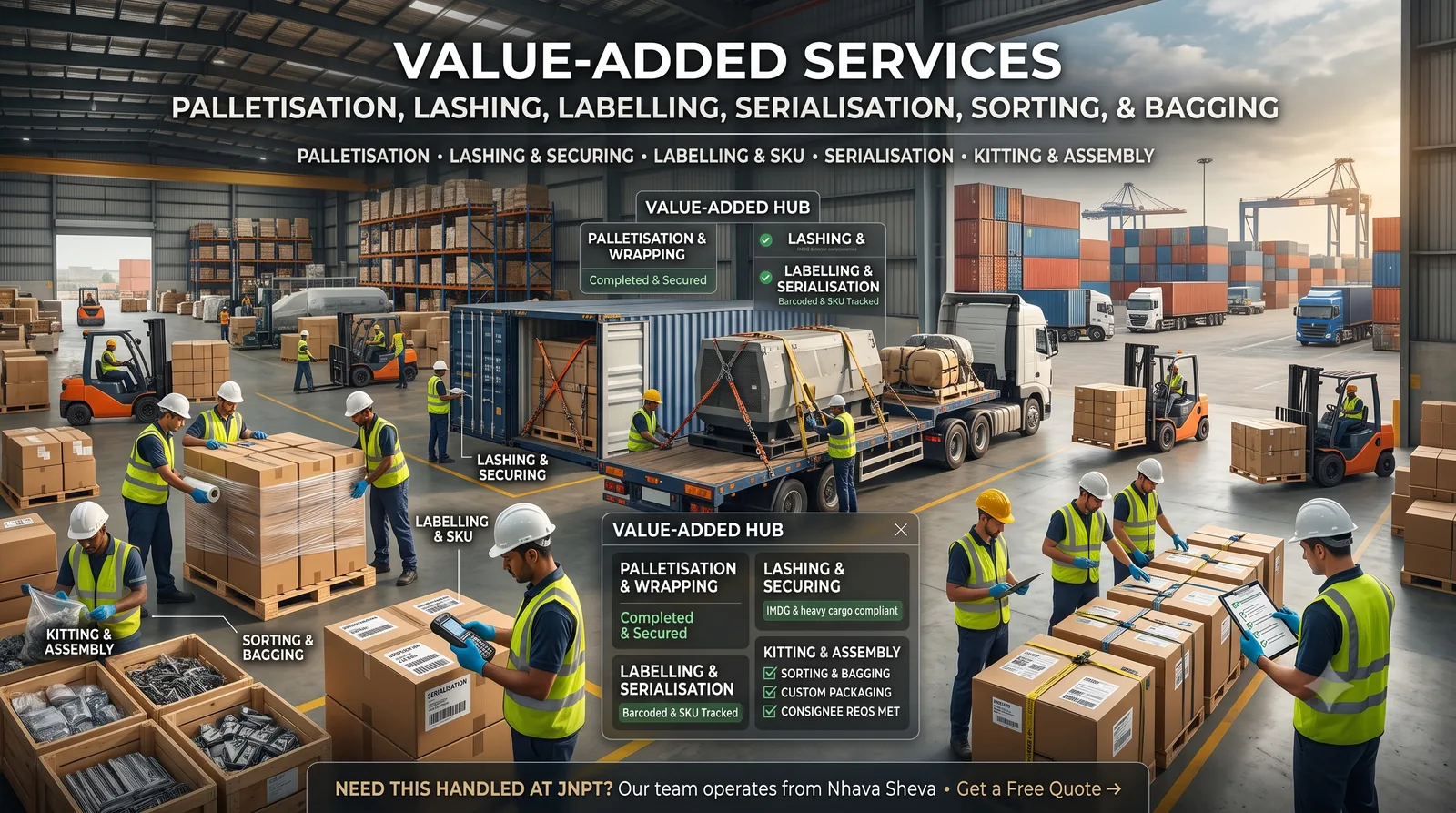
Cargo rarely gets damaged by the sea or the road themselves — it gets damaged by movement that proper preparation would have prevented.
Palletising cargo changes how it can be lifted, stacked, and moved through every subsequent step. A well-built pallet load survives forklift handling and stacking pressure that loose cartons simply cannot.
Lashing exists to stop cargo shifting under acceleration, braking, and the roll of a vessel at sea — not to hold static weight in place. Under-lashed cargo that looks secure at the dock can still shift significantly mid-transit.
Reviewing damage claims across most cargo types shows the same pattern: inadequate securing, not the transit conditions, is the dominant cause. The weather and the road were within normal parameters; the preparation was not.
Palletised FMCG cartons, lashed machinery, and blocked-and-braced project cargo all need different preparation approaches. Applying one standard method across different cargo types is where damage risk gets introduced.
Proper palletisation and lashing add a marginal cost to a shipment. A damage claim, a rejected consignment, or a delayed delivery while a claim is processed costs substantially more than the preparation would have.
Cargo preparation works best planned alongside the transport and handling plan, not bolted on right before loading. That is why we treat value-added prep as part of the same desk that plans transportation and CFS handling — not a separate booking. This is the core of our value-added services.
Our team operates from Nhava Sheva. Send us the details and we will come back within two business hours.
Get a Free Quote →