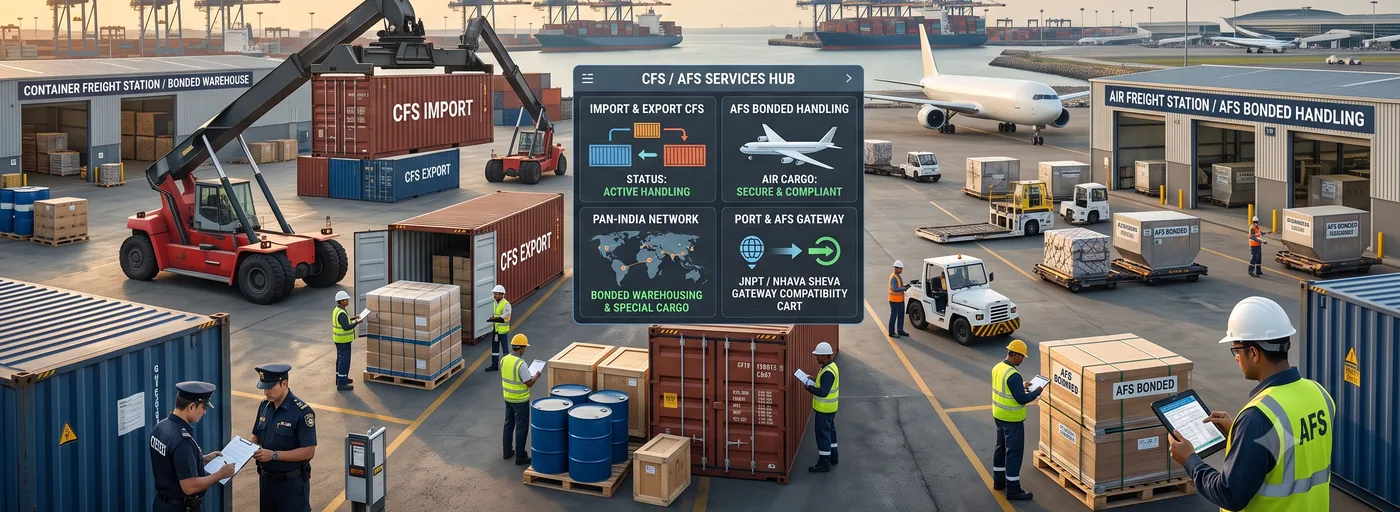
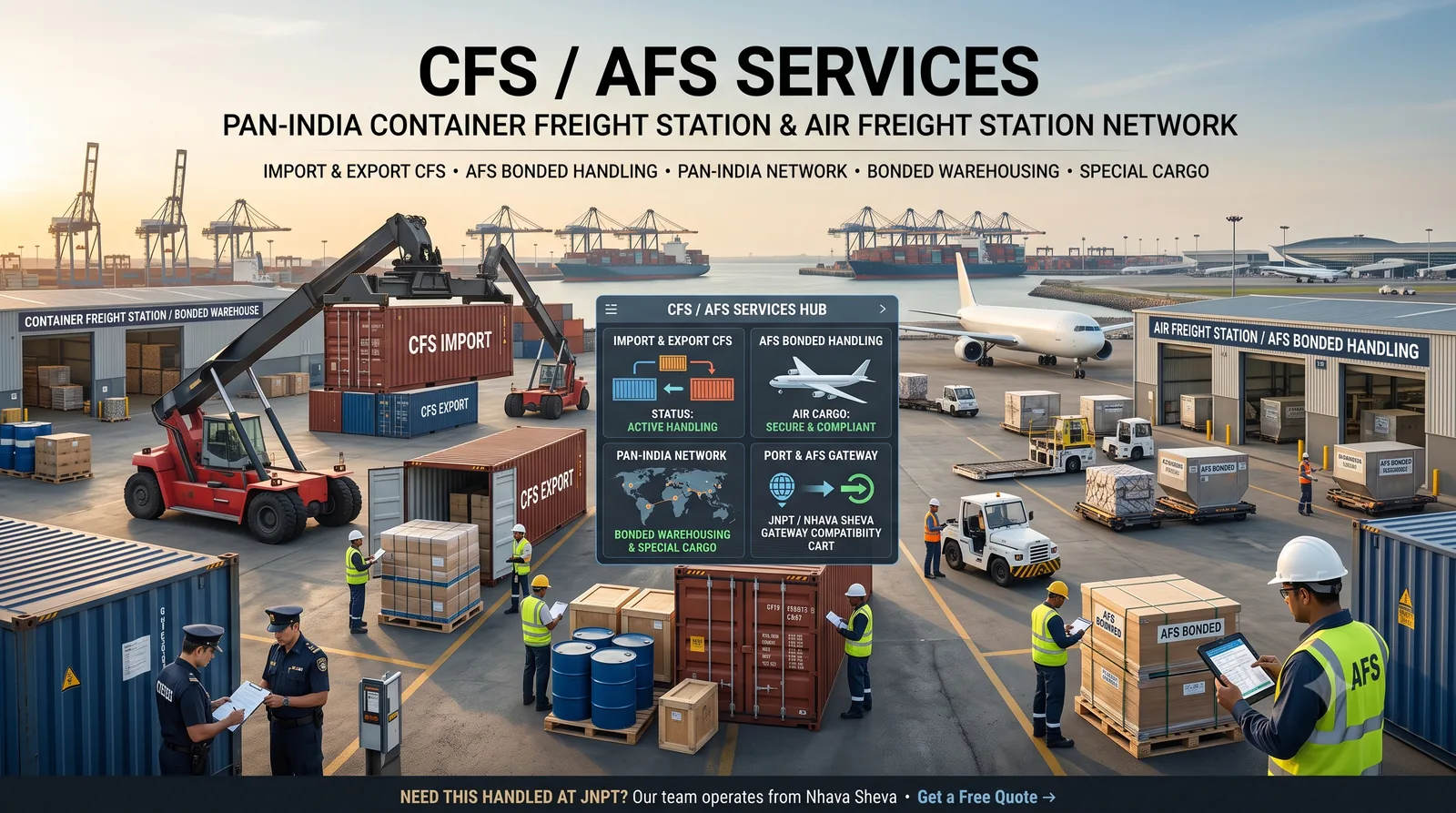
A Container Freight Station is where most of the real handling work at JNPT actually happens — not at the port berth itself.
JNPT's berths are built for fast vessel turnaround, not for storage or examination. Containers move off the terminal to a CFS within hours of discharge, and everything from customs examination to de-stuffing happens there instead.
Once a container arrives at the CFS, it is logged against the IGM, positioned in yard storage, and made available for customs examination or direct delivery, depending on the risk assessment applied to that consignment.
When customs flags a container for physical or scanner examination, that happens at the CFS, not the port. This is also where Out of Charge is granted before the container is released for onward movement.
For LCL cargo, the CFS is where containers are de-stuffed and individual consignments are separated for delivery, or where multiple LCL shipments are consolidated for export.
A CFS operating desk that sits physically inside the terminal resolves examination queries the same session rather than over a day of calls between the yard, the CHA, and the client. That difference compounds when several containers move through the same week. This is the core of our CFS / AFS service.
CFS handling connects directly to customs clearance on one side and inland transportation on the other — treating it as an isolated step rather than part of one coordinated movement is where most delays accumulate.
Our team operates from Nhava Sheva. Send us the details and we will come back within two business hours.
Get a Free Quote →