

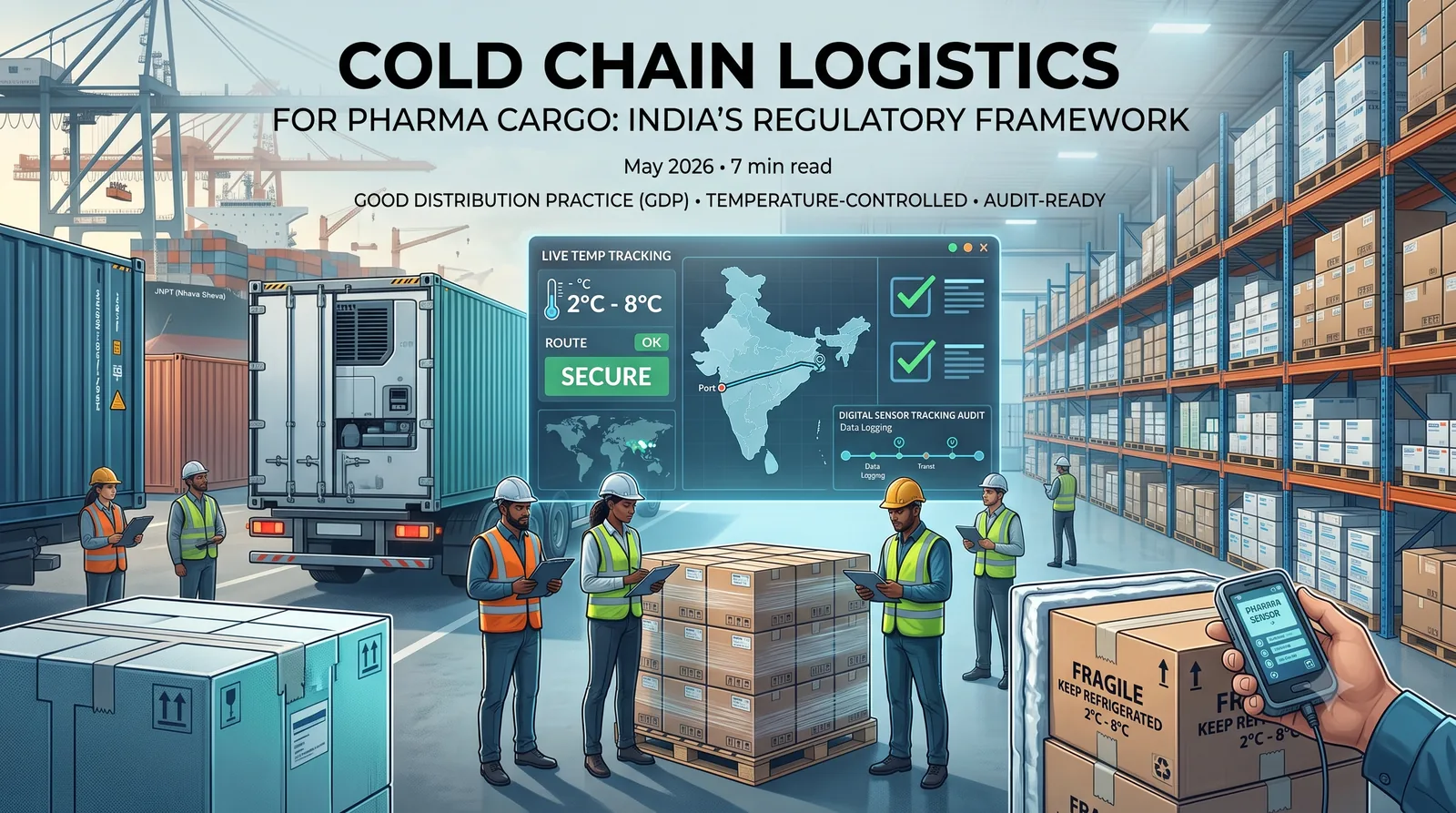
Temperature-controlled pharmaceutical movement demands documented custody. Here is what compliance actually requires in practice.
Pharmaceutical cargo is regulated as much on process as on outcome. It is not enough for the product to arrive within specification — you must be able to demonstrate that it never left specification. That evidentiary burden shapes every operational decision.
GDP principles require validated storage, calibrated monitoring, trained personnel, and documented deviation handling. In practice this means mapped warehouses, redundant refrigeration, and temperature logs that survive audit scrutiny.
Most pharmaceutical cargo sits in one of a few bands: ambient controlled, cool chain around 2–8°C, or frozen. Each band implies different equipment, different excursion tolerances, and different contingency plans. Mixing bands in one consignment introduces risk that is rarely worth the freight saving.
Data loggers should be placed according to a documented plan, not by convenience, and readings must be retrievable after the fact. When an excursion occurs, the value of the cold chain lies entirely in being able to show its extent and duration.
Temperature-sensitive consignments cannot absorb the dwell times that ordinary cargo tolerates. Pre-lodging documentation and having clearance representation on site are not refinements here — they are what prevents a compliant shipment from becoming a written-off one.
The weakest link defines the chain. Reefer container, port handling, CFS storage, and inland transport all need to hold the same band, which is why single-partner accountability across the whole movement reduces risk more than optimising any single leg. Our cold storage service is built around exactly this kind of GDP-compliant, single-desk accountability, for the pharma and other temperature-sensitive sectors we serve.
Our team operates from Nhava Sheva. Send us the details and we will come back within two business hours.
Get a Free Quote →