
FMCG and retail cargo is rarely about a single complicated shipment — it's about doing the same movement reliably, at volume, week after week, without the small errors that compound at scale.
A single documentation error on a one-off shipment is a nuisance. The same error repeated across a weekly FMCG shipping schedule is a recurring cost. Process consistency matters more for this sector than for lower-frequency cargo types.
FMCG cargo is time-sensitive not because of physical perishability in every case, but because of promotional calendars, seasonal demand, and retail shelf-life windows. Missing a launch date has a commercial cost that a generic delay calculation doesn't capture.
Retail and FMCG supply chains plan inventory and promotions around expected arrival dates. Reliable visibility into where a shipment actually is lets a retail buyer adjust plans in real time rather than discovering a delay when the stock fails to arrive.
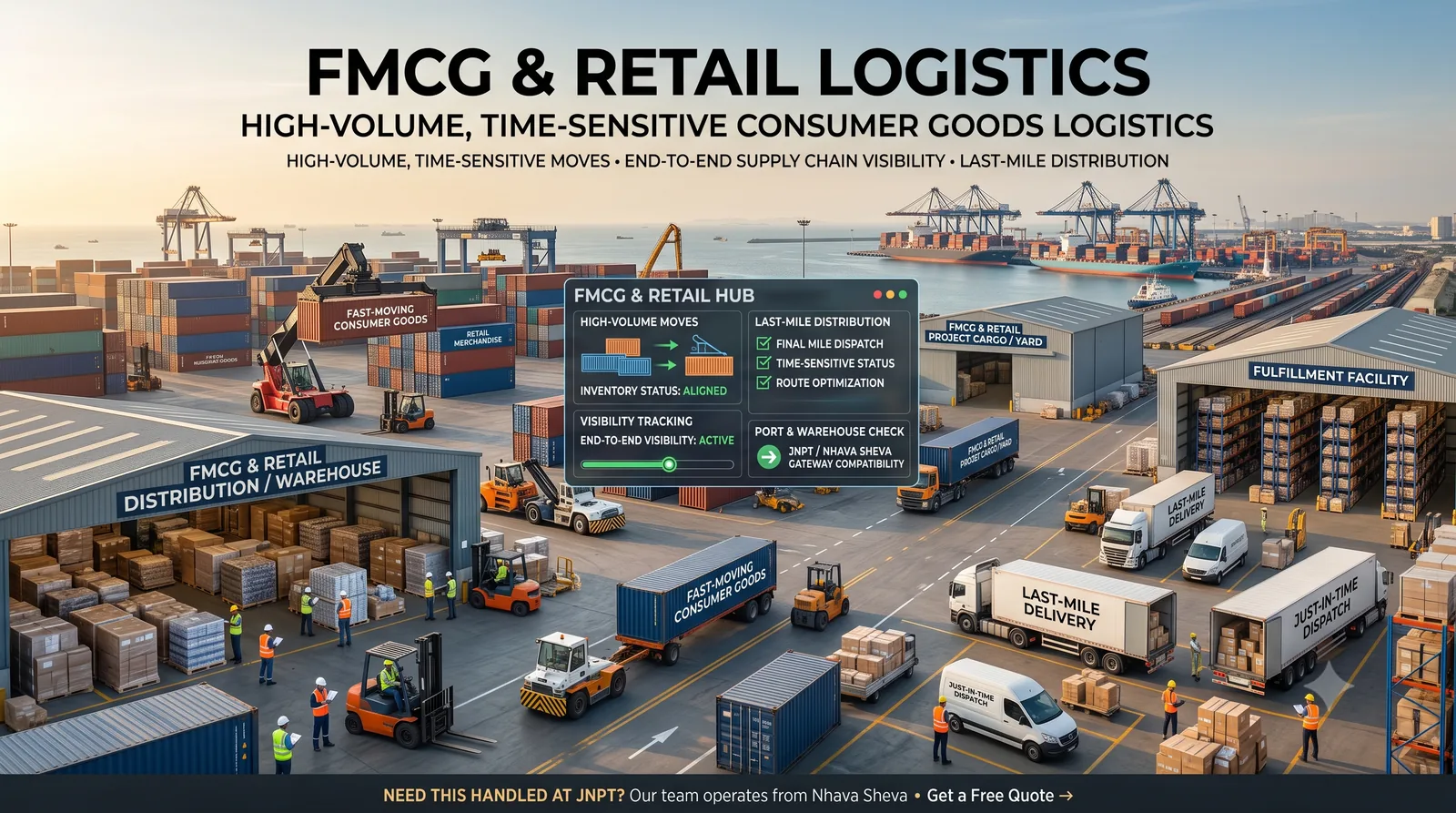
For FMCG specifically, the international and inland transport legs are often the easier part — last-mile distribution to distribution centers and retail points is where the real complexity and cost sits, and needs planning as carefully as the port-to-warehouse leg.
Not every FMCG shipment fills a container, and consolidating multiple smaller shipments efficiently — without adding transit time — is a meaningful cost lever for retailers and brands moving frequent, moderate-volume cargo.
High-frequency FMCG shipping benefits from the same account team handling freight, customs, and transportation consistently — the value here is less about any single clever solution and more about repeatable, reliable execution. See our transportation service for how we run this.
This sector is one of several we support directly — see the full range on our industries we serve page.
Our team operates from Nhava Sheva. Send us the details and we will come back within two business hours.
Get a Free Quote →